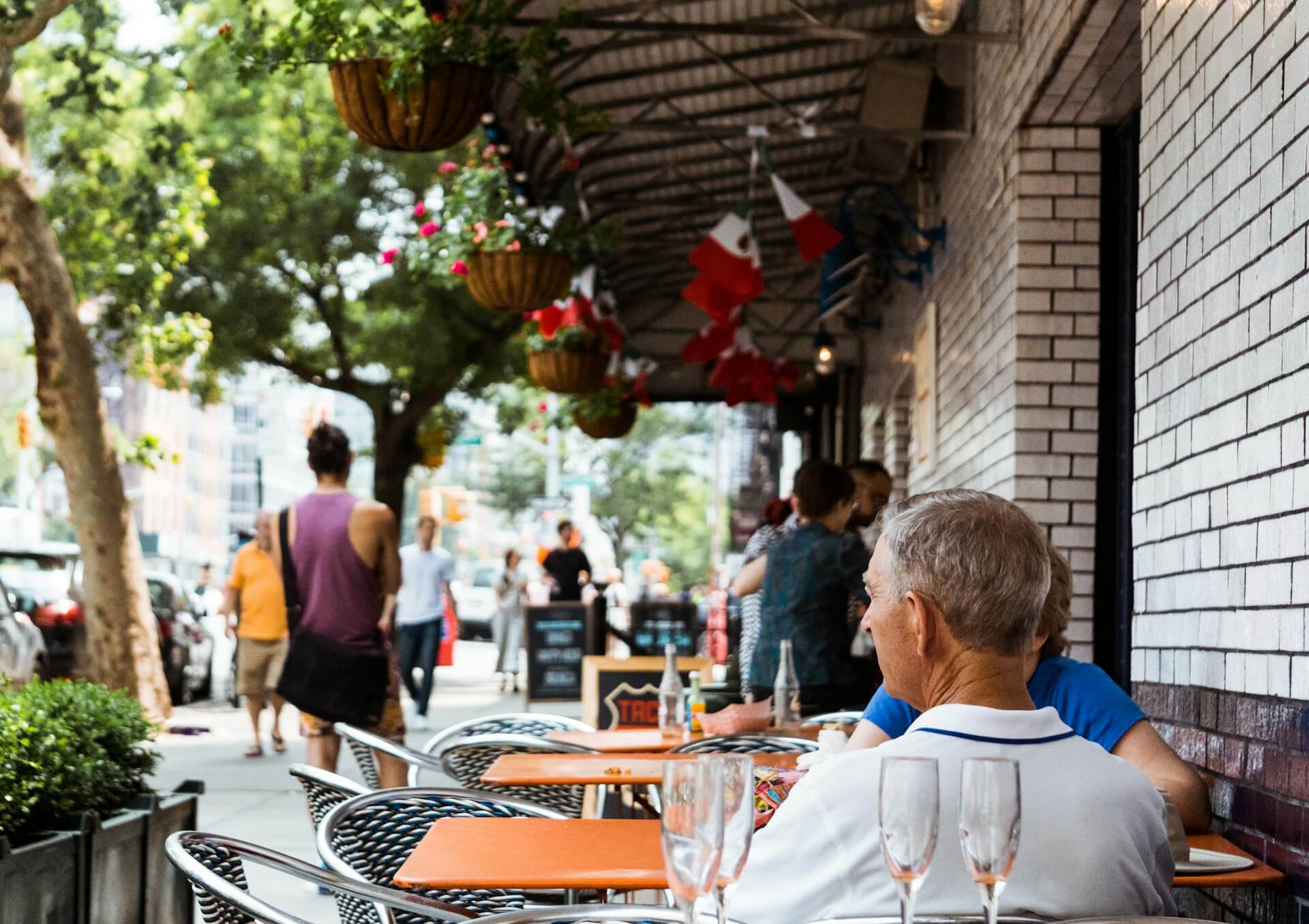
Why Is Dating in NYC So Hard? The Real Reasons
Dating in NYC is hard for specific, structural reasons. Here is what the data says about the paradox of choice, the cost, the gender ratio myth, the geography problem, and what actually works in 2026.
New York City has 8.3 million people. Nearly half of all households are single-person. You can download an app tonight and have 300 potential matches by morning.
So why does dating here feel like the hardest thing you have ever done?
You are not imagining it. You are not the problem. Dating in NYC is structurally, measurably harder than almost anywhere else in the country. But the reasons why are more specific than most people realize. And once you understand the actual mechanics, you can do something about them.
This guide breaks down the real reasons dating in New York is so hard, debunks a few myths that have confused a lot of people, and lays out what research actually says works. If you want the broader playbook beyond dating alone, we break that down in our guide on how to make friends in NYC.
The Numbers That Tell the Story
Before we get into the reasons, here is the data. These are not anecdotes. They are documented, sourced figures that explain why NYC singles are not crazy for finding this hard.
$150 average cost of a dinner-drinks-movie date in NYC (vs. $58.84 national average) |
84% of NYC singles ages 18-42 report having been ghosted (Thriving Center of Psychology survey) |
79% of Gen Z and 80% of Millennials report dating app burnout (Forbes Health 2024) |
82% of Gen Z report feeling lonely despite being on dating apps (Hinge x dcdx Research 2024) |
67% of regular dating app users report increased loneliness over time (Stanford University) |
27% drop in acceptance rate: research shows people become 27% more rejecting by the time they reach the last match in a large pool (Pronk & Denissen, 2020) |
#1 most expensive city to date in according to WalletHub's annual singles rankings |
45% of NYC households are single-person, the highest rate of any major US city |
Every one of those numbers points to a specific structural problem. Let us go through them.
7 Real Reasons Dating in NYC Is So Hard
Most articles about why NYC dating is hard blame 'the culture' or give you a list of generic tips. Here is what is actually going on at a structural level.
Reason 1: The Paradox of Choice Creates a Rejection Mindset Psychologist Barry Schwartz coined the phrase 'paradox of choice' to describe a counterintuitive finding: more options do not make people happier or better at choosing. They make people more anxious, less satisfied with their eventual choice, and more likely to avoid committing at all.In NYC, this plays out at an extreme scale. The city has one of the densest concentrations of young, educated, ambitious singles on the planet. And apps have made all of them instantly accessible.A 2020 study by Pronk and Denissen published in Social Psychological and Personality Science found that people in large dating pools developed what they called a 'rejection mindset.' By the time they reached the last match in a large set, their acceptance rate had dropped by an average of 27% compared to the first. They were not getting pickier because the options were worse. They were getting pickier because abundance itself triggers a devaluing response.In NYC, everyone is in a large pool. Which means everyone is constantly triggering this effect on everyone else. |
Reason 2: Dating Here Is Genuinely Expensive The national average cost of a date in 2024 was $58.84. In New York City, a dinner, drinks, and a movie averages $150. That is more than two and a half times the national average.This is not just about the money itself. It is about what the cost does to behavior. When every date represents a $75-150 commitment (before factoring in the time and mental energy), people raise their threshold for who they will agree to meet. First dates become high-stakes auditions rather than low-pressure exploratory conversations. The financial pressure distorts the whole process.WalletHub has ranked New York dead last in dating economics in its annual singles report. The gap between NYC dating costs and national norms is not small. It is foundational to why the experience feels so weighted here. |
Reason 3: The City Runs on Avoidance of Commitment There is a well-documented social phenomenon sometimes called 'Peter Pan syndrome' that operates at unusually high intensity in NYC. It is not a character flaw. It is a rational response to the city's incentive structure.When your city contains 8 million people, hundreds of bars and restaurants, a packed events calendar, and an app that surfaces 300 new potential dates overnight, there is always a reason to keep exploring. Commitment requires accepting a closing of other doors. In most cities, those doors feel finite. In NYC, they feel genuinely infinite. That is one reason more singles are shifting toward in-person connection, a trend we break down in why offline dating is back in NYC and where people are meeting now. This is compounded by the fact that NYC is a city of high-achieving people with demanding careers. Many people in their 20s and 30s are genuinely prioritizing professional milestones. Dating becomes something to do 'when the time is right' rather than a present-tense priority. The window for serious partnership keeps getting pushed back. |
Reason 4: The Geography Makes Proximity Almost Impossible Romantic relationships form through repeated, low-effort contact. That is not a theory. It is one of the most replicated findings in relationship psychology, known as the proximity effect (Festinger, Schachter, and Back, 1950; Zajonc's mere exposure research).NYC's geography systematically destroys proximity. That is also why recurring singles events in NYC can work better than one-off dates, because they create repeat contact without relying on random cross-borough luck. A date in the West Village and an apartment in Astoria represents 45 minutes each way on the subway. Brooklyn to the Upper East Side is not a casual Tuesday night. People in their 30s on the Upper West Side rarely have organic contact with people in their 30s in Flushing.The borough problem is real and specific. Most people who live in the outer boroughs and work in Manhattan spend 90 to 120 minutes commuting daily. Add a full work schedule, social obligations, and self-care, and the bandwidth for cross-borough dating evaporates fast.Neighborhood homogeneity also plays a role. The Upper East Side has a near 2-to-1 ratio of young single women to men. Jackson Heights, Queens has 1.7 men per woman in its singles population. If you live in the wrong neighborhood for your situation, the demographic reality is working against you before you even open an app. |
Reason 5: NYC Is a Transient City by Design New York has the highest population turnover rate of any major US city. Tens of thousands of people move to NYC each year to pursue careers, education, or a specific chapter of their lives. Tens of thousands more leave every year when that chapter ends.This transience does several things to the dating environment. It inflates the sense of infinite possibility (there are always new people), while simultaneously making sustained community feel impossible. The person you have been seeing for two months accepts a job in San Francisco. The friend group you built over a year disperses when leases expire.For people in their 30s especially, this transience collides with a biological and psychological reality: the window for finding a serious partner and building a life together does not stay open indefinitely. The city's transient energy works against the sustained investment that partnerships require. |
Reason 6: Apps Are Structurally Broken for This City Dating apps were designed to solve a genuine problem: meeting people outside your immediate social circle. For a while, they worked. Then they became businesses optimized for engagement rather than outcomes.The core problem is misaligned incentives. A dating app that successfully matches you with a long-term partner loses a customer. An app that keeps you swiping retains one. The product is designed to maximize time spent on the app, not time spent with a compatible partner.In NYC specifically, apps amplify the paradox of choice problem to its extreme. The city's density means the pool is genuinely vast. Apps surface all of it simultaneously. The result is the rejection mindset at industrial scale.The data is now unambiguous. Tinder lost 1.3 million net subscribers in 2024. Bumble's paying users fell 8.7% and its revenue dropped 7.6% in the year ending Q2 2025. Stanford research found that 67% of regular app users report increased feelings of loneliness despite having more theoretical connections than any previous generation. Apps are not solving the problem anymore. For many users in NYC, they are the problem. |
Reason 7: The NYC Dating Culture Normalizes Low Effort Ghosting is the clearest symptom of a low-effort culture, and NYC is its ground zero. The Thriving Center of Psychology found that 84% of NYC singles ages 18-42 reported being ghosted. This is not randomly distributed. It is a function of anonymity at scale.In smaller cities and towns, social consequences keep people accountable in dating. If you ghost someone, you might see them at the grocery store. Your mutual friend will hear about it. NYC's scale and density make social consequences nearly nonexistent. People date entirely outside their social graph, which removes the friction that normally keeps behavior civil.The normalization of low effort has a cascading effect. When ghosting is expected, people invest less emotionally upfront (to protect themselves). When people invest less emotionally, connections feel hollow. When connections feel hollow, commitment feels risky. The whole ecosystem trends toward surface-level interaction. |
The Gender Ratio Myth: What the Data Actually Shows
You have probably heard that NYC has more women than men, which supposedly explains why straight women have it harder. The reality is more complicated.
NYC's overall population is 53% female and 47% male. That figure is accurate. But it flattens enormous variation that actually matters.
Demographic Slice | The Reality |
|---|---|
Overall NYC population | 53% female, 47% male |
Never-married, ages 20-34 | Men actually outnumber women: 742,400 to 729,500 (US Census) |
College-educated, Manhattan, 20s | Women outnumber men significantly (the most competitive segment for straight women) |
Upper East Side singles | Young single women outnumber men nearly 2-to-1 |
Jackson Heights, Queens | 1.7 men per woman among singles |
Overall takeaway | The imbalance is real but neighborhood-specific and age-specific, not citywide |
The practical implication: if you are a college-educated woman in your 20s or early 30s living in Manhattan, the numbers are genuinely stacked against you in your immediate dating pool. If you are in your late 30s or 40s, or living in certain outer-borough neighborhoods, the ratio is much more balanced. Neighborhood and age bracket matter far more than the city-wide figure.
The Borough Problem: How Geography Shapes Your Dating Reality
This is the factor that almost no article about NYC dating addresses directly, and it is one of the most powerful variables in your experience.
Dating across boroughs in NYC is genuinely difficult. Not just inconvenient. Difficult in the sense that it requires ongoing logistical negotiation that most relationships at early stages cannot sustain.
Borough | Singles Density | Dating Reality |
|---|---|---|
Manhattan | Highest density, skewed female in 20s | Most competition, highest costs, easiest logistics for Manhattan residents |
Brooklyn | Strong singles community, younger median age | Brooklyn-to-Brooklyn dating works. Brooklyn-to-Manhattan adds 30-45 min each way per date |
Queens | More balanced gender ratios in several neighborhoods | Underserved by social singles events; residents often commute to Manhattan to date |
The Bronx / Staten Island | Less coverage in singles events and apps | Most cross-borough dating involves significant travel; more difficult to sustain early-stage connections |
The practical implication: if you are relying on apps that surface matches across all of NYC simultaneously, you are creating a logistical problem for yourself before you even get to compatibility. Filtering by neighborhood or commute radius is not being narrow. It is being realistic about what early-stage relationships can actually sustain.
What Dating in NYC Actually Feels Like (By Situation)
The experience of dating in NYC is not uniform. The challenges differ meaningfully by who you are and what you are looking for.
For Straight Women in Manhattan in Their 20s and 30s
This is probably the hardest demographic segment in the city. The gender ratio in college-educated, 20s-to-early-30s Manhattan is genuinely unfavorable. Apps surface an abundance of potential matches, but actual progress toward a committed relationship is slow. The men who are available are aware of the imbalance and many leverage it consciously or unconsciously.
The most common experience: plenty of first dates, inconsistent communication between dates, and a pattern where things fizzle out without explicit rejection. The abundance of options for men in this segment means the threshold for sustained effort is low.
For Straight Men in NYC
The common assumption is that men have it easier due to the gender ratio. The data does not fully support this. Among never-married singles ages 20-34, men actually slightly outnumber women in NYC overall. The male experience is different, but not necessarily easier.
The main challenge for men is the combined effect of high competition and the emotional economics of app dating. The match rate for men on most apps is significantly lower than for women, which creates a high-rejection experience that either desensitizes people or drives disengagement. The expectation that men initiate and finance early dates also collides with NYC's high cost structure.
For Singles in Their 30s and 40s
Dating in your 30s in NYC deserves its own conversation (and we have written a full guide: Making Friends and Dating in NYC in Your 30s). The short version: the social infrastructure that naturally facilitated meeting people in your 20s (college, entry-level jobs, shared apartments) has largely dissolved. People are more selective because they know what they want. The transient population issue hits harder because you are now watching a second wave of your peer group relocate or pair off.
The upside in this age range: people are generally more direct about what they want, and the gender ratio becomes more balanced as the college-educated Manhattan demographic disperses into broader NYC life.
For People Who Moved to NYC to Find Love
This is a real phenomenon and it deserves honesty. NYC's dating reputation is significantly inflated by its cultural image. The city is exciting. The people are impressive. But the structural factors above do not care about your reasons for moving here. If anything, being new to the city adds challenges: no social graph to draw on, no neighborhood roots, and navigating an unfamiliar city while also trying to date.
This does not mean it is hopeless. It means you need a different strategy than showing up and expecting the city to do the work.
What Is Actually Changing in the NYC Dating Scene (2025-2026)
Despite the challenges, something is shifting. And the direction of the shift is meaningful.
The IRL renaissance is real and growing in NYC. Eventbrite reported a 43% growth in singles event attendance between 2022 and 2023. If you want to compare the formats driving that shift, see our guide to the best platforms for community dating events in NYC. Searches for 'activities for singles' and 'singles events NYC' have increased year-over-year. App companies are responding by launching their own in-person events, a direct acknowledgment that the app model alone is not working. |
The underlying shift is psychological. After years of app-mediated dating, a meaningful portion of NYC singles are actively seeking environments where they can meet people in person, in low-pressure contexts, without the performance anxiety of a formal date.
The data supports this shift in several converging ways:
App disillusionment: 78% of app users report emotional exhaustion from online dating. Tinder lost 1.3 million subscribers in 2024.
Gen Z leading the retreat: 82% of Gen Z report feeling lonely despite app activity. This generation is actively seeking IRL alternatives.
Activity-based events growing: Game-based and activity-based singles events grew 163% in booking volume between 2022 and 2023.
Hinge's $1M IRL fund: In 2024, Hinge committed $1 million specifically to fund in-person events for its users, an explicit acknowledgment that the app-only model needed supplementing.
The pattern is clear: the people finding success in NYC dating in 2025-2026 are the ones who have stopped relying on apps as their primary meeting mechanism.
What Actually Helps: A Framework for Dating in NYC That Works
The structural problems above are real. But they are not insurmountable. Here is what the research and the on-the-ground experience of NYC singles actually supports.
1. Solve the Proximity Problem Deliberately
Since NYC's geography works against organic proximity, you have to manufacture it. This means creating recurring points of contact with the same pool of people, in the same physical locations, over time.
A class you attend weekly. A community you are part of that meets regularly. A singles club with a recurring event calendar. The research on relationship formation (Hall's 50-90-200 hour framework, Zajonc's mere exposure work) is clear that time and repetition are not optional ingredients in connection. They are the main ingredients. We cover this in more detail in our guide to making friends in NYC as an introvert, and the principles apply equally to dating.
2. Change the Format of Your First Contact
The formal first date is the worst possible format for early-stage connection. It is high-stakes, evaluation-heavy, and performed. Neither person is showing up as themselves.
The research on attraction is consistent: people are most attractive and most attractive to others when they are relaxed, engaged in something they enjoy, and not being evaluated. Activity-based contexts (a trivia night, a bowling lane, a wine tasting) provide exactly that environment. The activity gives you something to talk about other than yourselves. It creates moments of shared experience. It lowers the stakes.
3. Use Apps as One Tool, Not the Whole Strategy
Apps are not useless. They genuinely expand your reach beyond your immediate social network. But treating them as your primary or only mechanism has measurable costs: the rejection mindset, the emotional exhaustion, the loneliness paradox.
The people doing best in the NYC dating scene in 2025-2026 are using apps in combination with IRL exposure, not as a replacement for it. Apps surface names and faces. Real environments surface actual people.
4. Filter by Borough, Not Just by Preference
This is unglamorous advice that actually works. If you live in Astoria, put serious weight on matches from Queens and accessible parts of Brooklyn. If you live in the East Village, prioritize downtown Manhattan and nearby Brooklyn neighborhoods. Early-stage relationships are fragile. Do not build logistical obstacles into them before they have a chance to develop.
5. Invest in Your Social Infrastructure First
Many people in NYC try to date their way into a social life. The research suggests the opposite order works better. When you have a strong social graph, rich with people who share your interests and values, dating prospects emerge from it naturally. We have written about how to build that social infrastructure specifically in How to Make Friends in NYC. The principles overlap significantly with dating.
6. Give the Recurring Community Model a Genuine Try
The fastest-growing category in the NYC singles space is not a new app. It is activity-based membership communities that run consistent events for singles. The model works because it solves multiple structural problems simultaneously: it creates recurring proximity, it puts you in low-pressure activity contexts, and it gives you a community of people who share at least one fundamental thing (they are single and actively trying to meet people).
If you want to see what this looks like in practice in NYC, the best example we know of is My Social Calendar's singles events in NYC.
My Social Calendar: Built for Exactly This Problem
My Social Calendar is a members-only singles social club with a presence in New York City, Long Island, Washington DC, and Philadelphia.
The model addresses almost every structural problem described in this article:
The NYC Dating Problem | How MSC Addresses It |
|---|---|
Paradox of choice | Curated community, not an infinite pool. You see the same people across events, which builds familiarity rather than option overload. |
Evaluation pressure | Activity-based format (bowling, trivia, wine tasting, hiking, concerts) means you are doing something fun, not performing for a timer. |
Proximity problem | 22-24 events per month creates repeated contact with the same community. Proximity gets manufactured through the calendar. |
High cost of single dates | Membership starts at $69/month for unlimited events. Per-event cost is a fraction of a single NYC date. |
Transience trap | The recurring community creates a stable social anchor in a city that is otherwise constantly cycling people through. |
App exhaustion | No swiping. No ghosting architecture. Real people in real situations, selected for the fact that they are actively trying to meet people. |
Pricing
1 Month $89/mo Flexible, month-to-month | 3 Months $79/mo Most popular | 6 Months $69/mo Best value |
All plans include a free 30-day trial. Try it with zero commitment. See all NYC singles events and start your free trial
Frequently Asked Questions About Dating in NYC
Is NYC actually a bad city for dating?
It depends on what you compare it to and what you are looking for. NYC is measurably more expensive to date in than anywhere else in the US, and the paradox of choice effect is amplified by the city's scale and app density. WalletHub has ranked New York last in dating economics. NBC New York called it one of the worst cities to be single based on the same data. That said, the city contains millions of interesting, ambitious singles, and people do find relationships here. The key is understanding the specific structural challenges and working around them, not waiting for the city's general social scene to deliver results.
Why do people ghost so much in NYC?
Ghosting is a function of anonymity at scale. In smaller communities, social consequences keep people accountable in dating: if you disappear on someone, you will likely see them again or hear about it through mutual connections. NYC's size and social density means most dating happens entirely outside your social graph. There are no consequences for disappearing. The Thriving Center of Psychology found that 84% of NYC singles ages 18-42 have been ghosted. The solution is not to find better people. It is to date within communities where social accountability exists.
Is dating in NYC different for men vs. women?
Yes, significantly. Straight women in college-educated Manhattan demographics face an unfavorable gender ratio in their immediate pool. The experience tends to be: plenty of first dates, inconsistent follow-through, and slow progress toward commitment. Men face a different challenge: lower match rates on apps, an expectation to initiate and pay, and a high-rejection environment that can become desensitizing. Across genders, the structural problems (cost, paradox of choice, transience, geography) apply universally.
What are the best ways to meet people in NYC outside of apps?
The most effective approaches are activity-based communities with recurring contact (singles clubs, recurring classes, sports leagues), social events specifically designed for singles, and organic community building through consistent neighborhood presence. We cover the full range of options in our guide to the best social clubs for singles in NYC. For a ready-to-join example, My Social Calendar runs 22-24 singles events per month in NYC covering bowling, trivia, wine tastings, hiking, and concerts. Plans start at $69/month with a free 30-day trial. The common thread across everything that works: repeated exposure to the same people in low-pressure contexts.
Does the dating scene get better in your 30s in NYC?
It shifts, which is different from getting easier or harder. In your 30s, people are generally more direct about what they want, the gender ratio becomes more balanced, and the 20s-style option paralysis softens. The challenges in your 30s are different: the social infrastructure that naturally produced meetings (college, early career, shared apartments) has dissolved, and the city's transience means your peer group is less stable. We have a dedicated guide on this: How to Make Friends and Date in NYC in Your 30s.
The Bottom Line
Dating in NYC is hard for specific, structural reasons. The paradox of choice, the cost, the transience, the geography, the ghost-friendly anonymity of app dating in a massive city. None of these are your fault. All of them are navigable.
The people doing best in the NYC dating scene right now are not the ones who have found a better app. They are the ones who have built recurring, in-person community with other singles and let connection develop from there. That is not romantic advice. It is what the research says.

Expectations in a Relationship: What’s Fair & What’s Not
Learn what healthy relationship expectations look like, which ones are unrealistic, why lowering expectations is bad advice, and how to say what you need.

Relationship Goals: What They Are & 50 Worth Having
Explore 50 real relationship goals grounded in research, from communication and trust to intimacy, conflict repair, shared growth, and long-term commitment.