What Singles Events Have the Highest Turnout? Ranked by Data
Discover which singles event formats draw the biggest crowds, from activity-based events to speed dating, with turnout data and practical insights for NYC singles.
Not all singles events are equal. Some draw 10 people to a room that fits 60. Others develop waitlists weeks out and turn people away at the door. The difference is not luck. It is format, context, and a few specific mechanics that determine whether people show up.
This breakdown ranks singles event formats by typical attendance and explains why some formats consistently outperform others. If you are choosing events to attend, this helps you find the ones worth your time. If you are organizing one, this is your playbook.
The Data First: What Is Actually Growing
|
The trend is clear: total interest in singles events is growing fast, and activity-based formats are growing fastest. Here is the ranked breakdown of what actually fills a room.
Ranked: Singles Event Formats by Typical Turnout
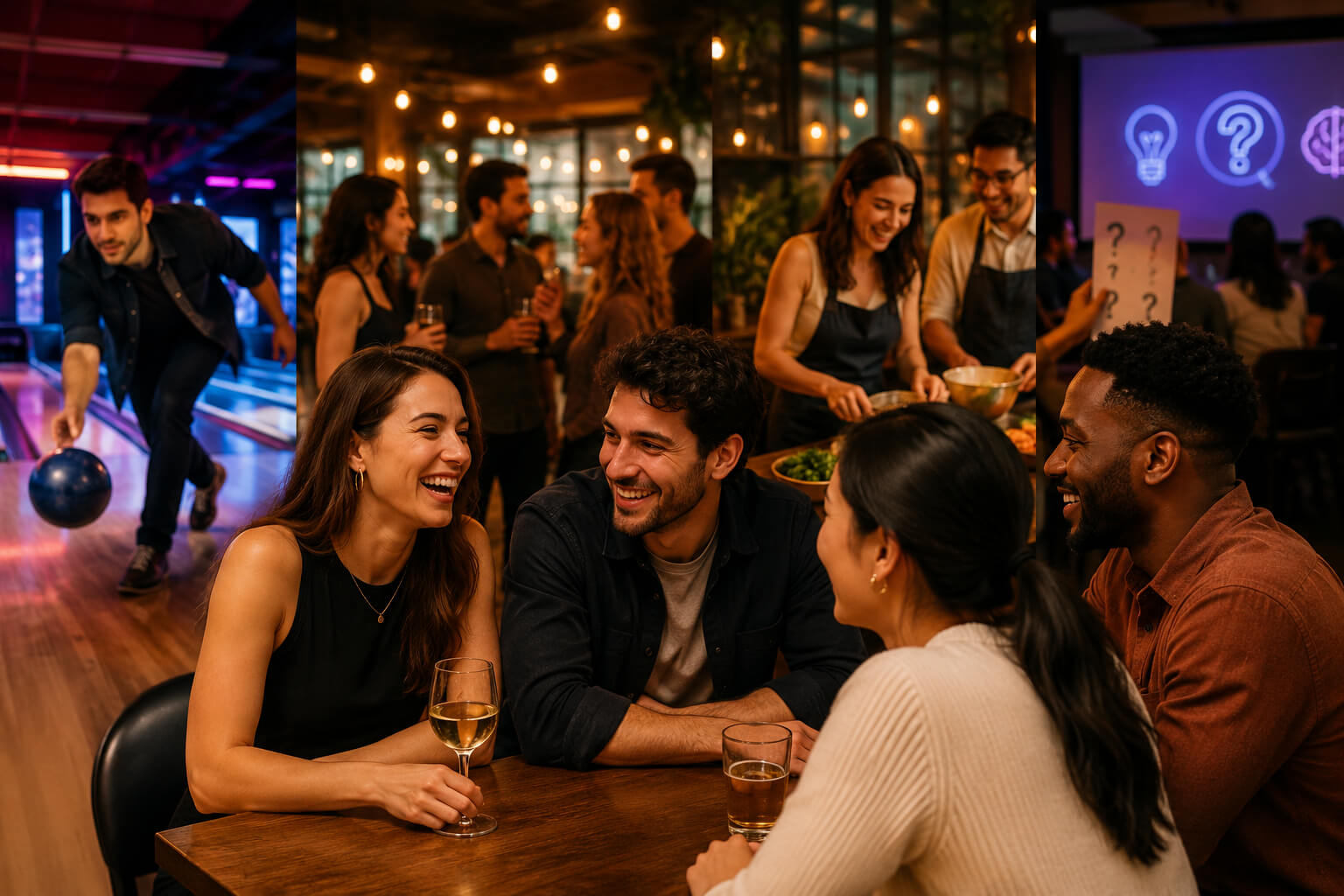
#1 Activity-Based Group Events (Bowling, Trivia, Pickleball, Cooking Classes) Why the turnout is high: These consistently pull the highest attendance of any singles event format. The activity itself acts as a social lubricant, removing the pressure to perform pure conversation. People who would hesitate at a cocktail party will commit to a bowling night or a trivia evening. The specific activity also acts as a built-in topic of conversation and an excuse to engage with anyone in the room. The data: Game-based and activity-based singles events grew 163% from 2022 to 2024. CityPickle's singles pickleball events generate weekly waitlists. Cooking class singles nights at venues like Sur La Table consistently sell out weeks in advance. Bowling and trivia formats run by singles clubs report 60-120 attendees regularly. |
#2 Membership-Based Singles Club Events Why the turnout is high: Social clubs that run regular events for a consistent membership base achieve high turnout through the community effect: people come back because they know the people, trust the format, and have already had a good time. The recurring model compounds attendance over time. New members hear about it from existing members. Events fill because the community has inherent social proof. The data: Membership-based singles clubs like My Social Calendar run 22-24 events per month across NYC, Long Island, Washington DC, and Philadelphia, with consistent attendance driven by member retention and word of mouth. The recurring model produces more reliable turnout than one-off events. |
#3 Themed Cocktail Parties and Singles Mixers Why the turnout is high: A well-themed event with a clear concept outperforms a generic mixer significantly. 'Singles night at the rooftop bar' is forgettable. 'Singles night at the rooftop cinema, bring a blanket' has a proposition. Themes reduce the social risk of attending because they give people something to say when they tell a friend where they are going. They also create shared context in the room, which lowers the anxiety threshold for approaching strangers. The data: Rooftop Cinema Club's themed singles nights saw 40%+ attendance increases over standard screenings. Events with a clear concept (holiday, seasonal, cultural tie-in) consistently outperform generic mixers by 20-35% in ticket sales on platforms like Eventbrite. |
#4 Speed Dating Events Why the turnout is high: Speed dating fills rooms when it is well-organized and marketed to a specific demographic (by age bracket, profession, or interest). The format has a clear value proposition: you meet 10-20 people in two hours. That efficiency pitch is legible and attractive. The limitations are on conversion rather than attendance. People show up; fewer leave with meaningful connections. The data: Established operators like NY Minute Dating and SpeedNYDating run events with 20-40 participants regularly. The format peaked in the mid-2000s but has maintained a stable audience. Gender balance issues (women sell out first, men linger) can affect the actual versus registered turnout. |
#5 App-Organized IRL Events Why the turnout is high: Dating apps like Hinge have invested in in-person events, committing $1 million specifically to fund IRL gatherings in 2024. These draw attendance from the app's existing user base, which provides a built-in marketing channel. The drawback is that app users often have the same passive-swipe habits in person, and events can feel like speed dating without the structure. The data: Hinge's IRL events draw anywhere from 50-200 attendees in major cities depending on the event format and venue. The app's backing provides marketing reach that independent organizers lack, but conversion to actual connections tends to be lower than activity-based formats. |
#6 Generic Cocktail Mixers Without a Theme Why the turnout is high: A room full of single people with drinks and no structure. These can work in small groups where everyone ends up talking to everyone. At scale, they suffer from group fragmentation (people cluster with whoever they arrived with), performance anxiety (approaching strangers without a pretext is hard for most people), and high no-show rates because the value proposition is vague. The data: Generic mixers have the highest no-show rate of any singles format, commonly 25-40% of ticket holders. Attendees report lower satisfaction and lower rates of returning to the same event. The format's main advantage is simplicity of execution, not attendee experience. |
Why Activity-Based Events Win on Turnout
The data is clear but the reason is worth understanding, because it drives format decisions.
They Lower the Barrier to Commitment
'Come to a bowling night with other singles' is a lower-friction commitment than 'come to a party where you will have to meet people and make conversation.' When you are doing something, showing up is less intimidating than when the event is explicitly social performance. Lower barrier to commitment means higher ticket sales and lower no-show rates.
They Give Everyone a Role
In a generic mixer, the only available activity is talking to strangers, which is one of the most anxiety-inducing social tasks for most people. In a bowling night or a trivia game, everyone has a role. You are a teammate. You are playing. You have something to do with your hands and your attention. The social pressure disperses into the activity.
They Create Natural Repetition
Activity-based events run in rounds, games, or stations. This gives participants multiple natural points to move, reset, and talk to different people without the social awkwardness of extracting yourself from a conversation at a mixer. More interactions per event means more potential connections, which means more positive word of mouth, which means higher attendance at the next one.
They Age Well in a Community
The same activity-based event can be run repeatedly with a regular community because the activity is the variable, not just the group. Trivia one week, bowling the next, wine tasting the week after. Attendees come back for the variety and the community, not just the format. This is why membership-based singles clubs running activity calendars achieve the most consistent turnout over time.
What Kills Turnout at Singles Events
The flip side of the data is worth covering for anyone choosing events to attend or organizing one.
Poor gender balance: Events that attract a skewed ratio (usually significantly more women than men) generate negative word of mouth quickly. Men's no-show rates are higher at most traditional formats, which compounds the problem.
Unclear value proposition: 'Come meet singles' is not a proposition. 'Come play trivia with other singles at a bar in the East Village' is. Specificity drives commitment.
Wrong venue for the format: A cocktail mixer in a loud bar where conversation is impossible, a cooking class in a space too small for the group size. Format-venue mismatch kills attendance and reviews simultaneously.
No recurring schedule: One-off events have no community momentum. Recurring events build on each previous event's attendees and word-of-mouth. Monthly or more frequent is the baseline for building an attendance base.
Poor timing: Tuesday evenings and Sunday mornings are structurally low-turnout days for singles events. Thursday through Saturday evenings, and Saturday afternoons for outdoor activities, are the high-attendance windows.
In NYC: Which Events Are Actually Filling Up
New York has one of the most active singles events scenes in the country, which means both more options and more noise. The events with consistent high turnout in NYC share common traits: they run on a regular schedule (not one-off), they have a clear activity hook beyond just 'meet singles,' and they are organized by operators with existing community followings. You can see a current calendar of high-attendance singles events in NYC at My Social Calendar's singles events page.
What is drawing the most consistent attendance in NYC right now:
Trivia nights run by singles clubs with recurring members
Bowling events on Friday evenings (the social proof of seeing a full set of lanes is itself a draw)
Wine tastings with structured tasting menus (gives everyone a shared focus)
Outdoor events in spring and fall: hiking groups, running clubs, park picnics
Holiday-themed events in November and December (the seasonal hook is reliable)
Frequently Asked Questions
What type of singles event has the best attendance?
Activity-based events consistently have the highest attendance and lowest no-show rates. Bowling, trivia, pickleball, cooking classes, and wine tastings all outperform generic cocktail mixers by 20-50% in typical attendance. The activity lowers the commitment barrier and gives everyone a reason to show up and something to do when they get there.
How many people typically attend a singles event?
It varies widely by format and organizer. Speed dating events typically aim for 20-40 participants per event. Activity-based events at larger venues can accommodate 60-120 people. Membership-based club events with established communities reliably fill events in the 30-80 person range. Generic mixers tend to have higher ticket sales but also higher no-show rates, so actual attendance is often 60-70% of registrations.
Are singles events growing or declining?
Growing significantly. Eventbrite reported 49% year-over-year growth in singles event attendance from 2023 to 2024, following 43% growth the year before. Activity-based and game-based singles event formats grew 163% from 2022 to 2024. The growth is driven by app fatigue: 79% of Gen Z and 80% of Millennials report burnout from dating apps, and IRL events are the primary alternative they are turning to.
What singles events have the highest male attendance?
Activity-based events, particularly sports-adjacent formats (bowling, pickleball, trivia, axe throwing), attract higher male attendance than pure social mixers. Men's attendance barriers are largely about fear of rejection and performance pressure in explicitly social formats. When the event has an activity component, the social stakes feel lower and male registration rates increase. Events that communicate this clearly (not 'meet singles' but 'bowling night for singles') see better gender balance.
Do singles events actually work for meeting people?
The events that work best are the ones with a recurring community model, activity-based format, and consistent organization. One-off cocktail mixers rarely produce lasting connections because the social surface is too brief and the stakes feel too high. Membership-based clubs with regular event calendars, where you see the same community across multiple events, produce significantly better outcomes. Research on relationship formation (Hall's 2019 time studies, Zajonc's proximity research) confirms that repeated exposure, not single meetings, is what builds actual connection. See how My Social Calendar structures its NYC singles events around exactly this model.

Expectations in a Relationship: What’s Fair & What’s Not
Learn what healthy relationship expectations look like, which ones are unrealistic, why lowering expectations is bad advice, and how to say what you need.

Relationship Goals: What They Are & 50 Worth Having
Explore 50 real relationship goals grounded in research, from communication and trust to intimacy, conflict repair, shared growth, and long-term commitment.